

Discover Gold
Gold has been known and highly valued for jewellery-making since ancient times. The oldest gold deposits were probably discovered in India around 5,000 years ago, from where the metal reached Babylonia and Persia. At the same time, gold was also mined in Nubia, Egypt. The Phoenicians knew how to extract and work with gold before the Greeks and Romans.
Gold is found almost all over the world. Remarkable deposits were discovered during the 19th-century gold rushes in the United States – particularly in Alaska and California – as well as in South Africa, Australia and Siberia.
In Bohemia, gold was mined and panned from around the 8th century along the gold-bearing rivers Otava and Blanice, whose sands were rich in this precious metal. The best-known gold mines were located near Jílové, where gold occurred in quartz veins. During the 13th and 14th centuries, gold was also mined in Kašperské Hory, where small quantities continue to be extracted today.
Gold in Nature
Pure gold most commonly occurs naturally as grains or flakes, either in quartz veins running through rock or in alluvial deposits created by the erosion and washing away of gold-bearing rocks.
Larger pieces, known as nuggets, are extremely rare. One of the largest gold nuggets ever found was discovered in Australia and weighed 70.9 kg. Other large nuggets have been found in the United States, Russia, South Africa and Brazil. Smaller quantities of gold can also occur alongside pyrite.
It is estimated that approximately 117,000 tonnes of this precious metal have been mined and panned worldwide to date.
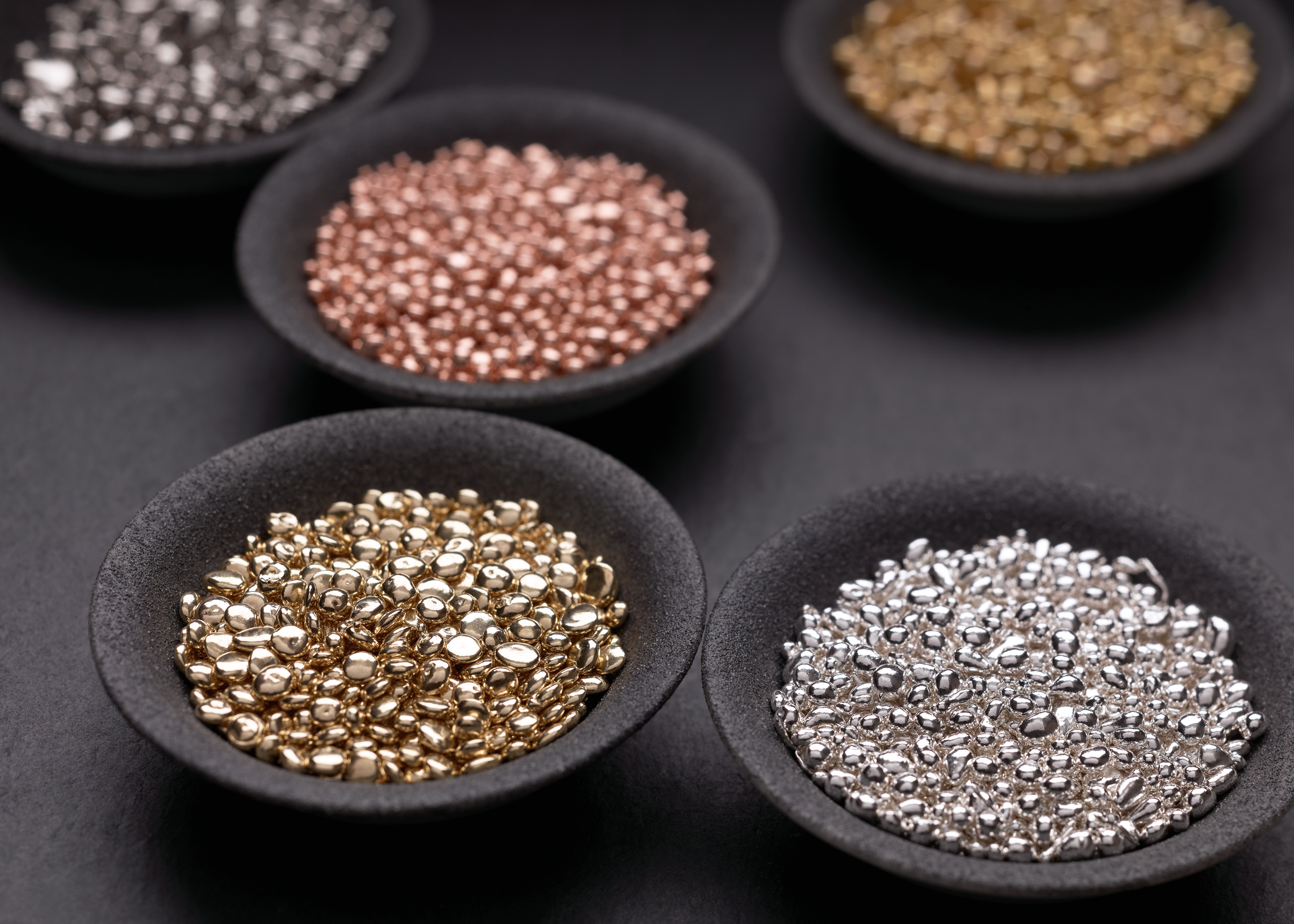
Gold has a beautiful yellow colour and a brilliant lustre. Its colour depends on the quantity and type of other metals it contains. Naturally occurring gold is typically yellowish, but alloys used in bespoke jewellery-making can alter its colour while increasing its hardness.
Adding silver, platinum, nickel or zinc produces pale or white gold, while copper gives gold a red or rose hue.

The gold has a beautiful yellow colour and high lustre. The colour of gold depends on the amount and type of impurities it contains. Natural gold is typically yellowish, but when used in custom goldsmithing, its colour changes and its hardness increases.
If silver, platinum, nickel, or zinc are added, light or white gold is produced. Adding copper creates red or rose gold.
Physical Properties
Gold (Au) has a density of 19.3 kg/dm³ and a melting point of 1,063°C. It has a beautiful yellow colour and a brilliant lustre. Gold is very soft, with a hardness of 2.5, and is the most malleable and ductile metal on Earth. It can be hammered into sheets as thin as 0.0001 mm.
A single gram of pure gold can be drawn into a fine wire up to one kilometre long. It remains stable when exposed to air and can be dissolved by aqua regia, mercury, potassium cyanide and sodium cyanide.

Gold Purity
The purity of gold is determined by the proportion of pure gold in the alloy and is expressed in carats. The purest gold is 24 carats, while 18-carat gold contains 75% pure gold and 14-carat gold contains 58.5%.
The remaining part of the alloy used in gold jewellery most commonly consists of silver. Other metals may include platinum, palladium, copper, zinc, nickel and cadmium.
Pure gold is rarely used except by goldsmiths and for plating in the chemical and engineering industries. Gold is traded on world markets by the troy ounce, which is equivalent to 31.1 g.
The Advantages of Gold
Gold jewellery is suitable for customers with sensitive skin or allergies to common metals.
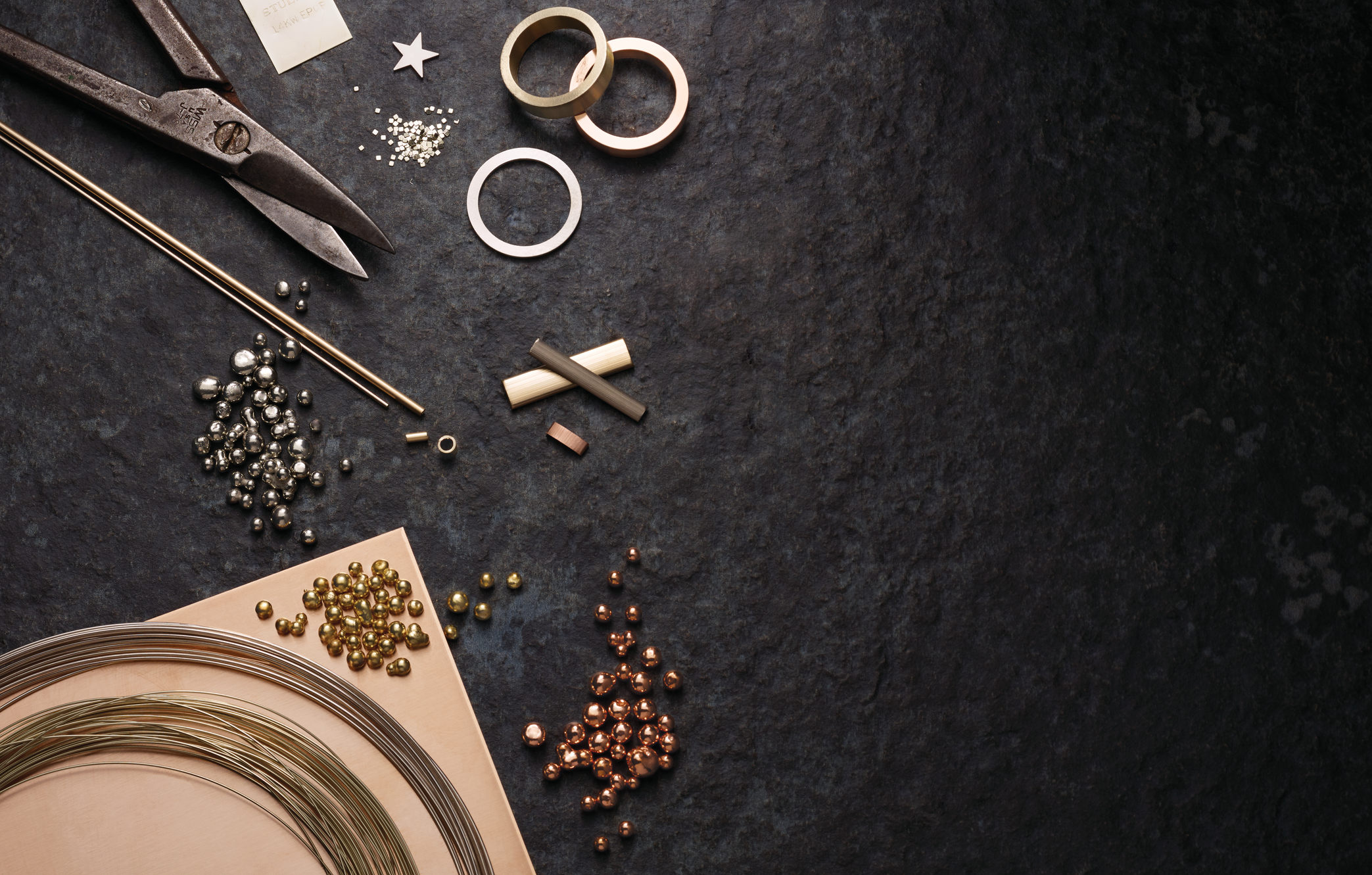
Another advantage of gold is the wide choice of colours available, allowing it to suit every customer’s preference. Jewellery can be made in yellow, white or rose gold. Yellow gold is traditional and timeless. White gold complements fairer skin tones and has become increasingly popular in recent years, alongside growing demand for platinum. Rose gold offers a contemporary option that blends gently with the skin tone and is particularly popular among young, modern women.
Gold jewellery retains its value over time and can serve as a lasting investment should the need arise.
We create all SALABA gold jewellery in 14- and 18-carat white, yellow and rose gold.
